After a delivery on Thursday 27th August 2026, we now have almost all of the bridge components on site at Peak Rail’s Rowsley. The notable exception is the bridge span, which is still at Steelway in Wolverhampton who have been undertaking the conservation and rebuilding work.
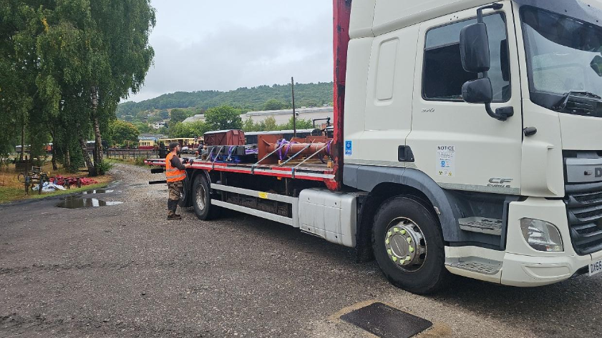 Image Credit: Ben Riley
Once the four stone caps for the up platform bridge pad have been delivered from Haddon Stone and fitted, the columns for that side of the station can eventually be installed. The columns themselves were also returned on 27th August. They had been retained at Steelway to use as a test fit for the footbridge’s landing panels and span joining plates. The columns need cleaning and painting before being installed at Darley Dale station.
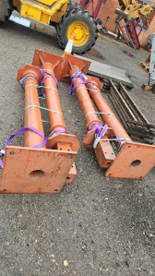 Image Credit: Ben Riley
All four staircases have been totally dismantled, each piece individually cleaned and primed, and rebuilt. 704 holes have been reamed out from 16mm to 20mm. This was an unexpected task, and has taken weeks. This work has been necessary to allow riveting to place after alignments have been checked. On completion, some 2,500 rivets will have been placed in bridge components after the removal of the nuts and bolts used in transportation back from Steelway.
The DWVRT is very grateful to the Peak Railway Association for funding the purchase of a batch of rivets, which are now on site, and a few dates have been scheduled for installing the first batches of the rivets by the volunteer team.
Next the current plan is that one of the staircases will be fitted (probably the downside pavement) and be fixed in place once rivetted and finally painted, but the other three staircases cannot be fitted until the lattice span is up. This will involve some trial fitting so components may appear and disappear briefly. The landing panels are at Rowsley South awaiting some bolt holes being cut and then matching holes drilling in the castings.
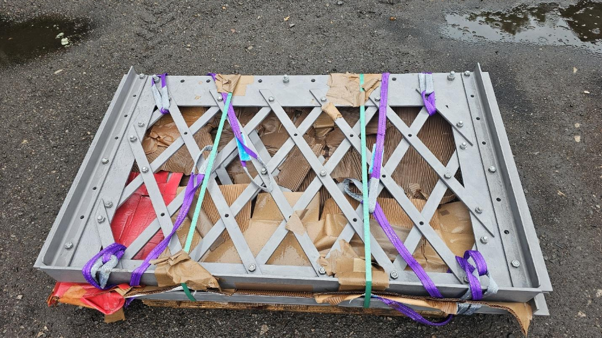 Image Credit: Ben Riley
The up platform wall will be extended to its original length once suitable materials have been secured. This will conceal the giant concrete block put in to support the bridge. The intention is to match the existing stone courses as closely as possible.